Plan your climb
A mountain that makes its own weather.
Kilimanjaro is so large that it creates its own weather. Here is what to expect, and how to give yourself the best chance of the summit.
i. When to climb
Climbable all year, best in the dry months.
Near the equator, Kilimanjaro has wet and dry seasons rather than summer and winter. We don’t recommend climbing in the heavy rains of April, May and November, when trails turn muddy and difficult. Whatever the month, pack for warm sunny days and cold, wet ones.
ii. Six climate zones
From the equator to the arctic.
Each zone brings less rain and colder air than the one below it. Scroll to climb.
- 800–1,800 m
Cultivated foothills
Rich volcanic soils support banana and coffee farms around the mountain’s base. Days 21–32 °C.
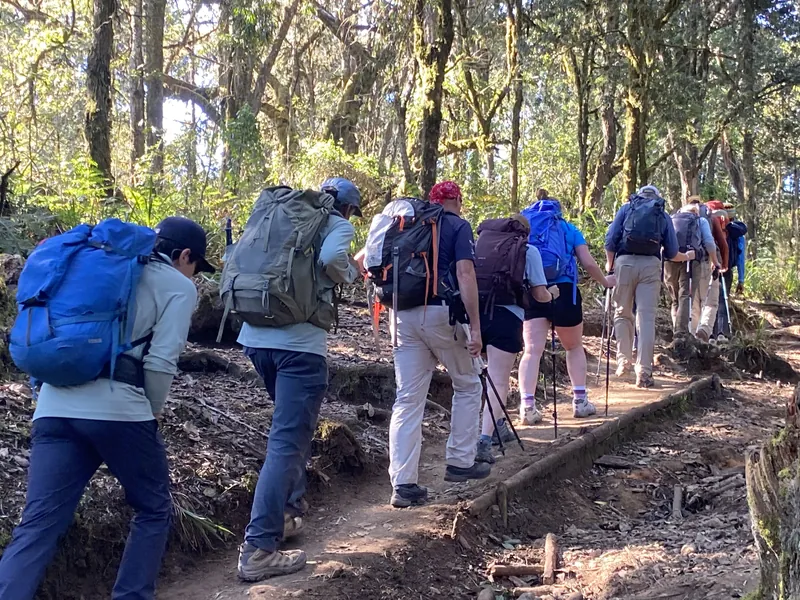
- 1,800–2,800 m
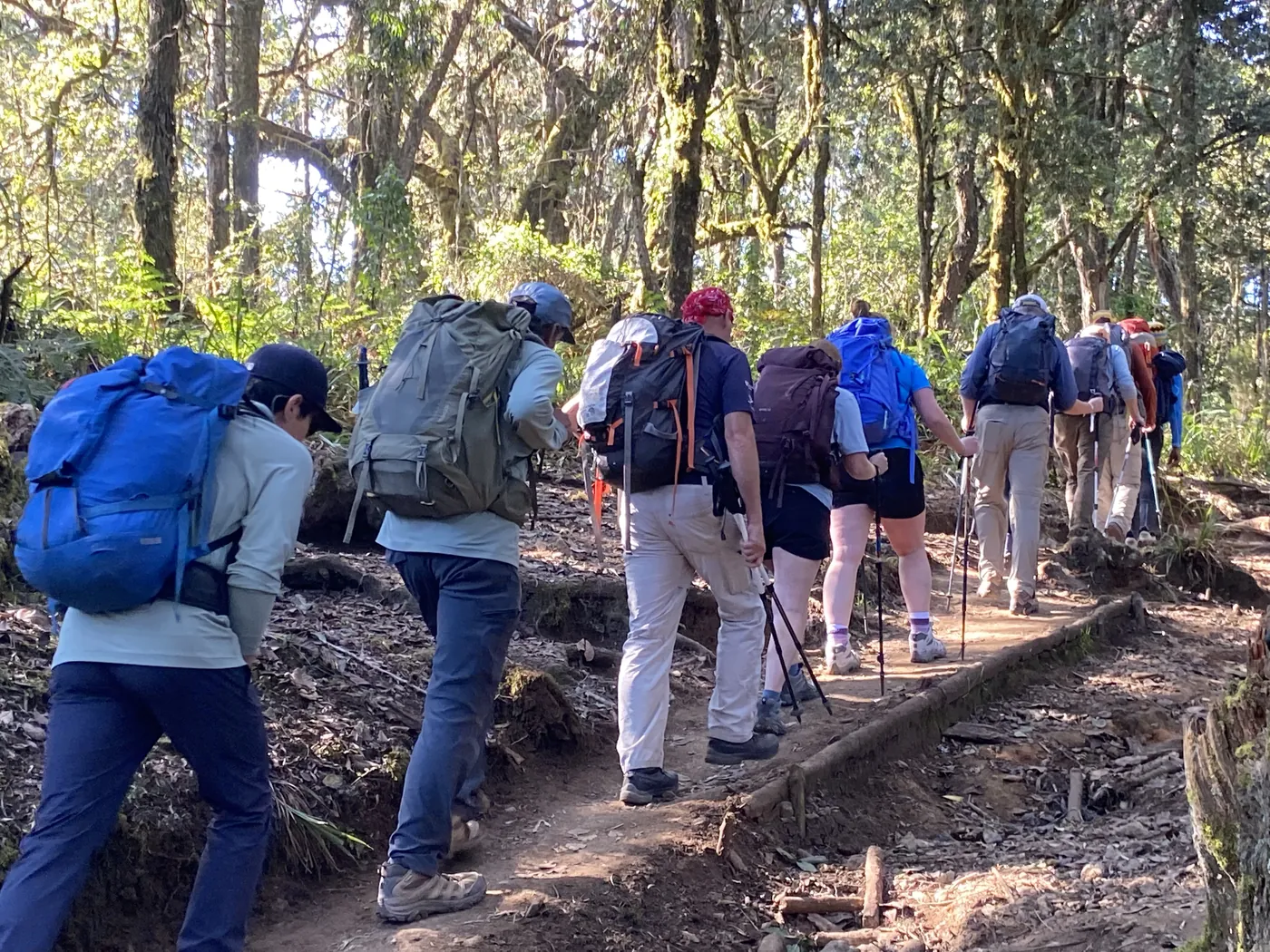
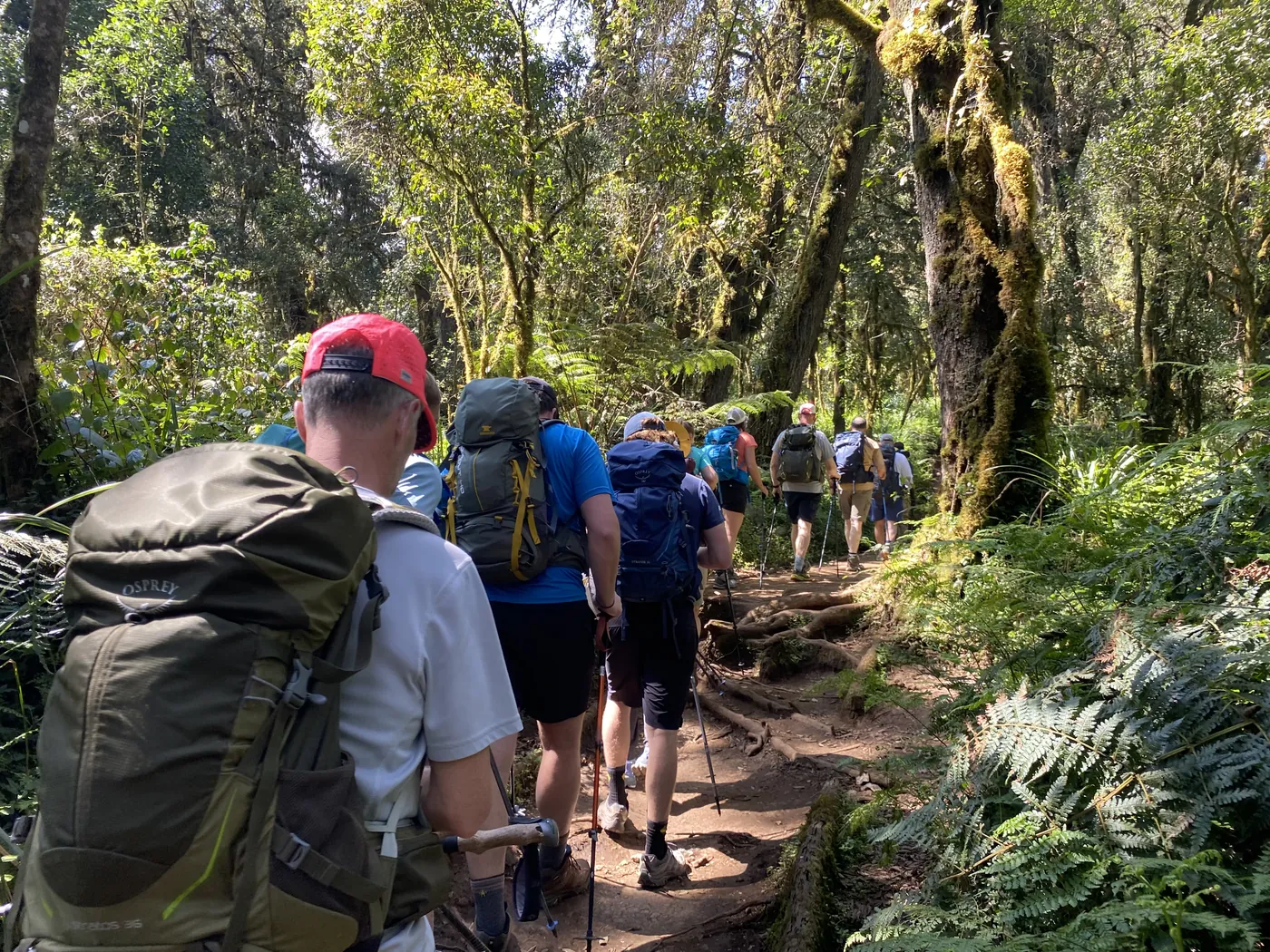
Rainforest
An interlocking canopy over mosses, ferns and orchids, often blanketed in cloud. Look for colobus monkeys.
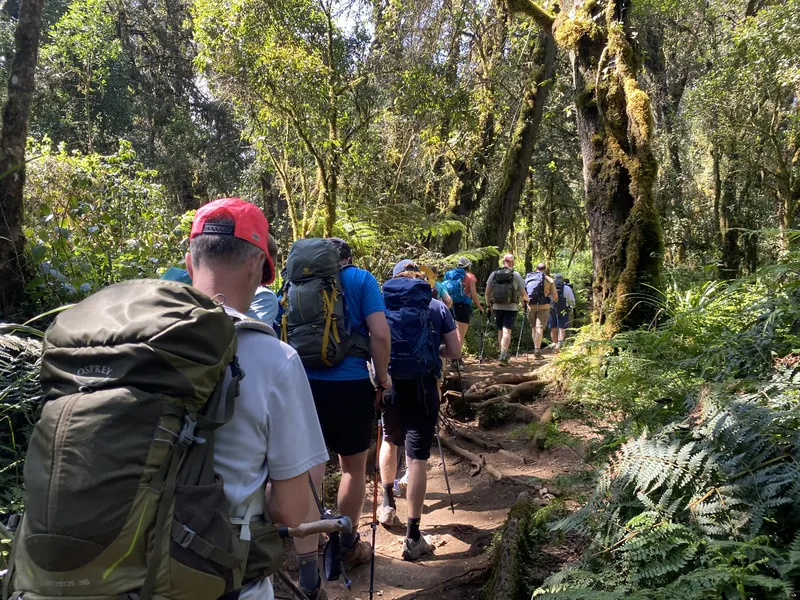
- 2,800–3,350 m
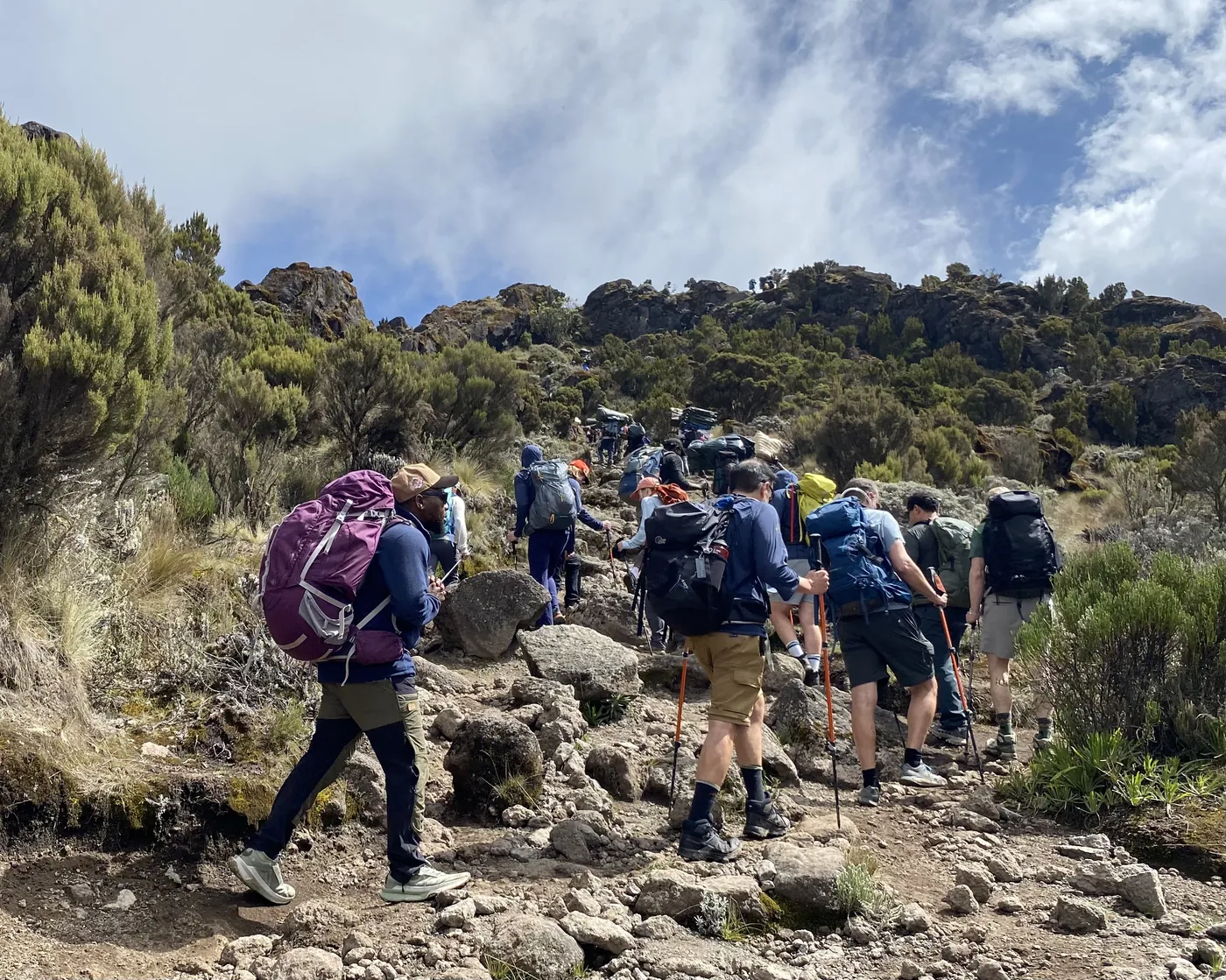
Heath
Less rain, heavy mists, rolling meadows and small wildflowers. Nights can fall below freezing.
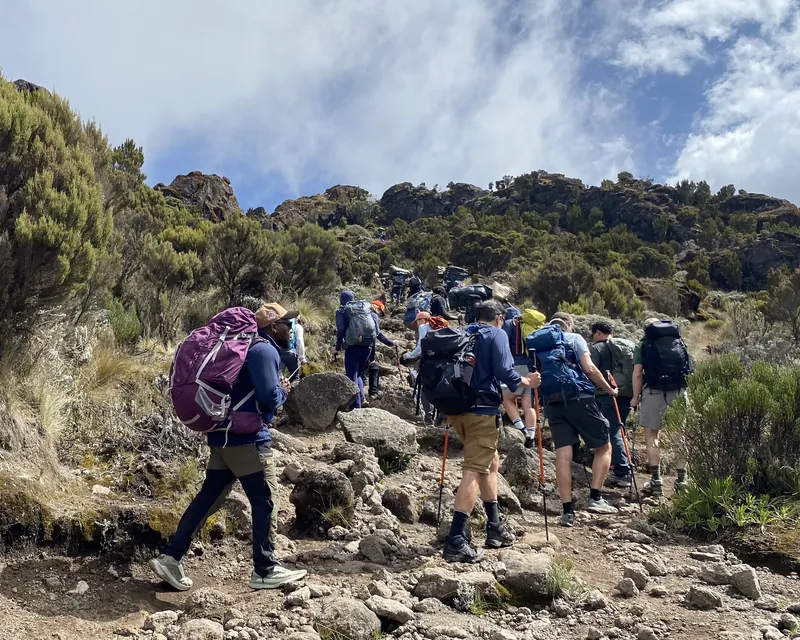
- 3,350–4,020 m
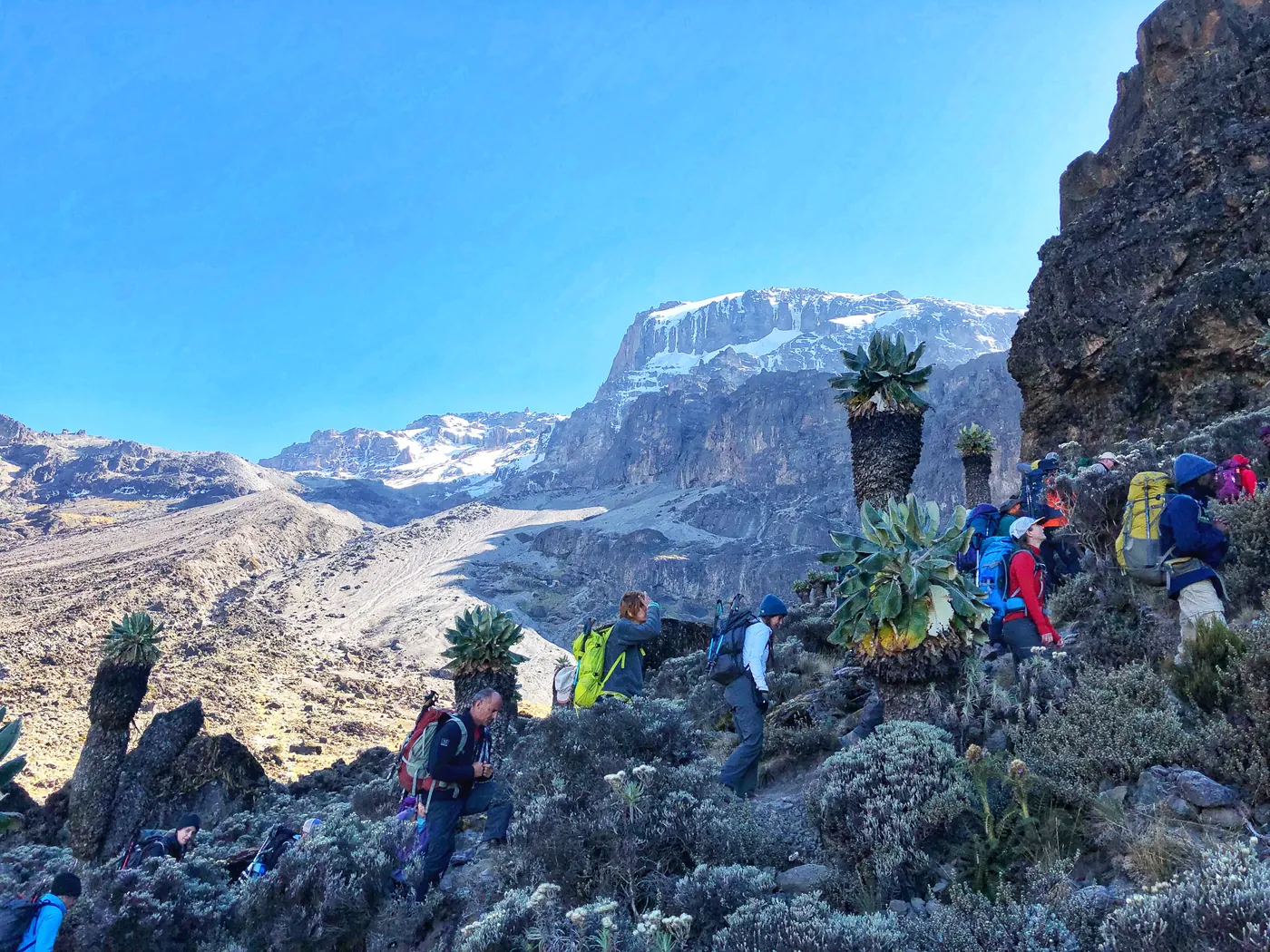
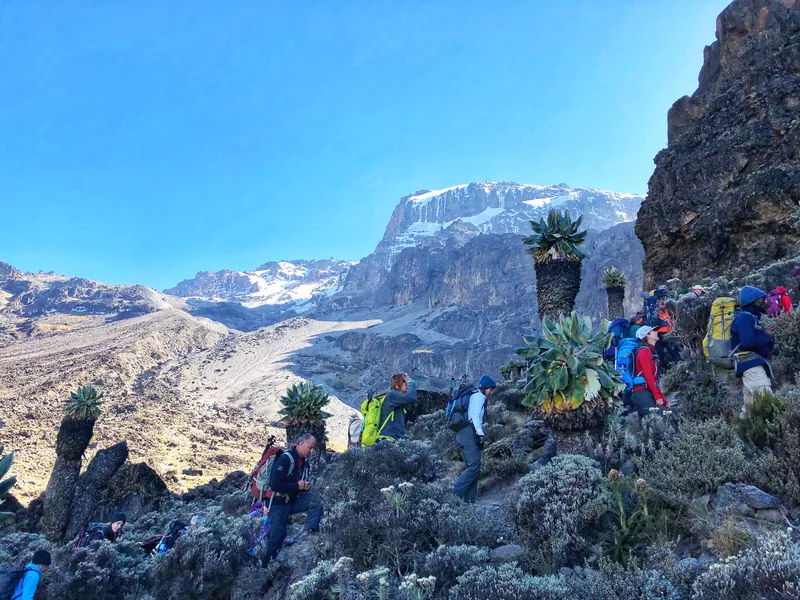
Moorland
Much drier, with warm days, freezing nights and the extraordinary giant groundsels.
- 4,020–5,030 m
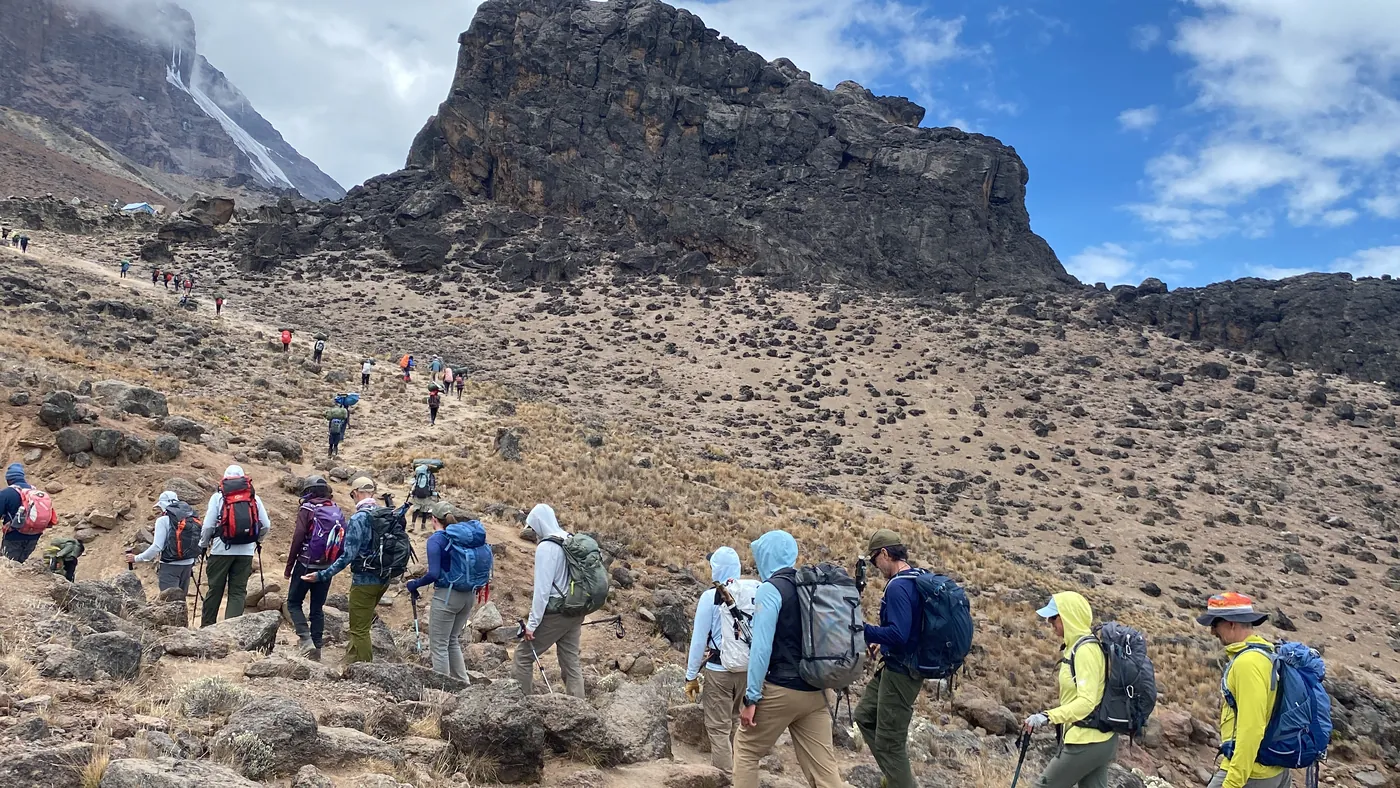
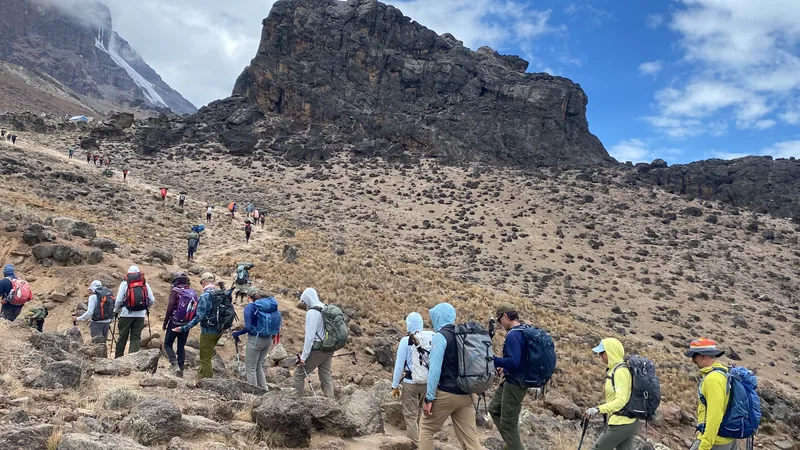
Alpine desert
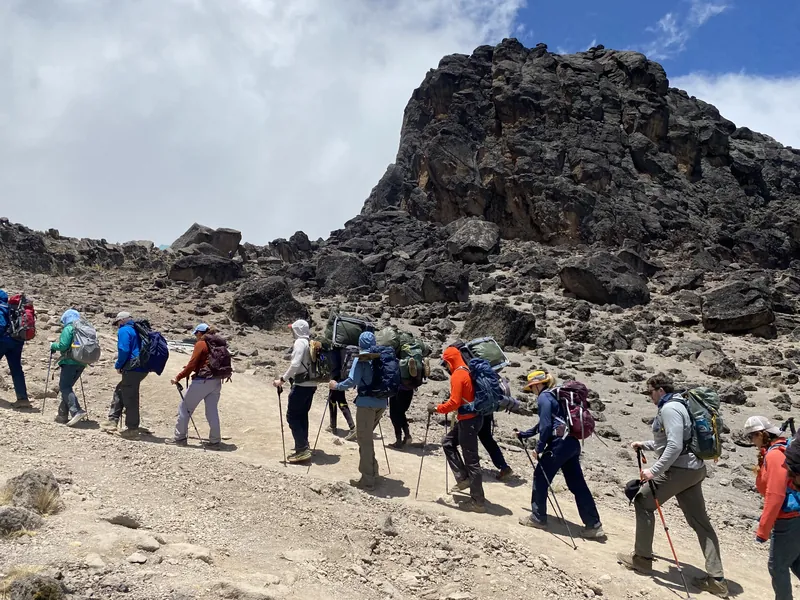
Harsh, dry and windy: bare rock and ice, often compared to the surface of the moon. The air is noticeably thin.
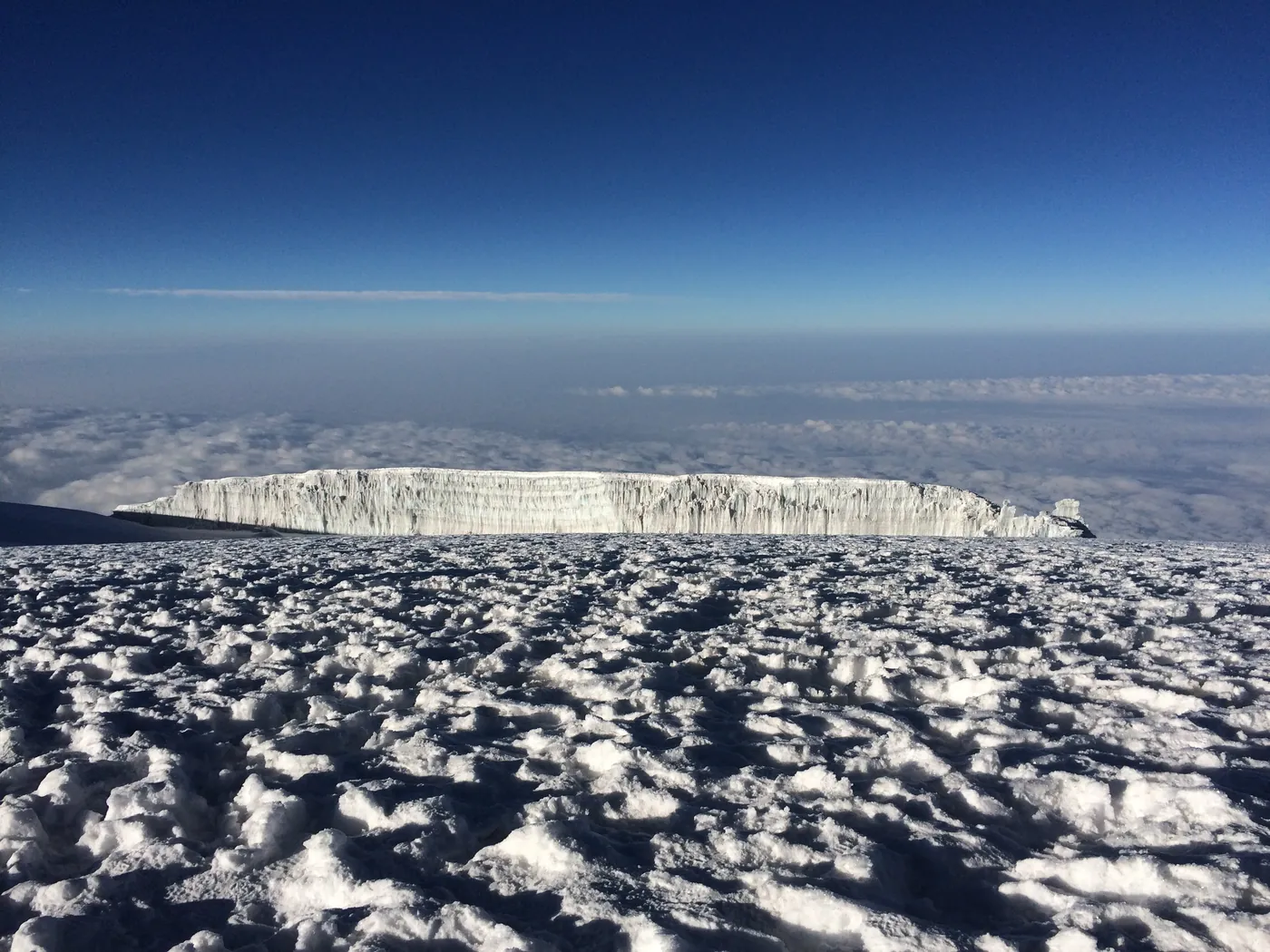
- 5,030–5,895 m
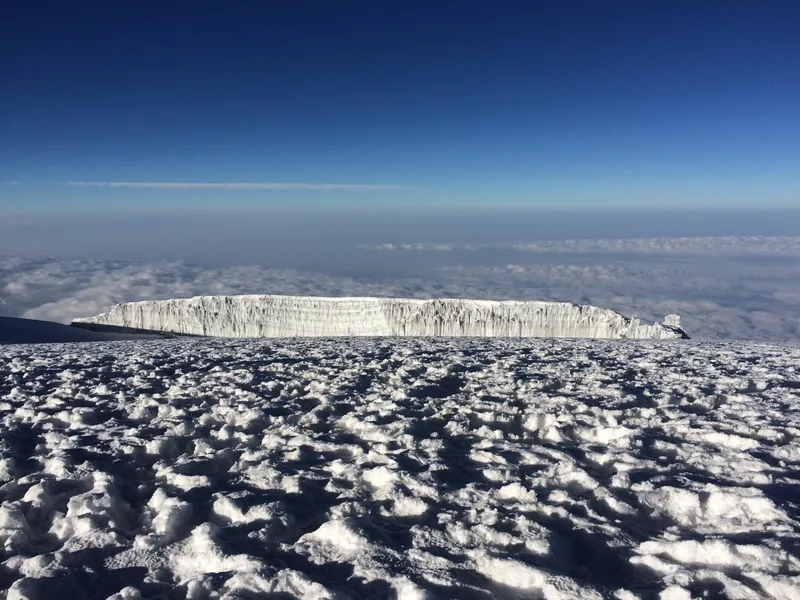
Arctic summit
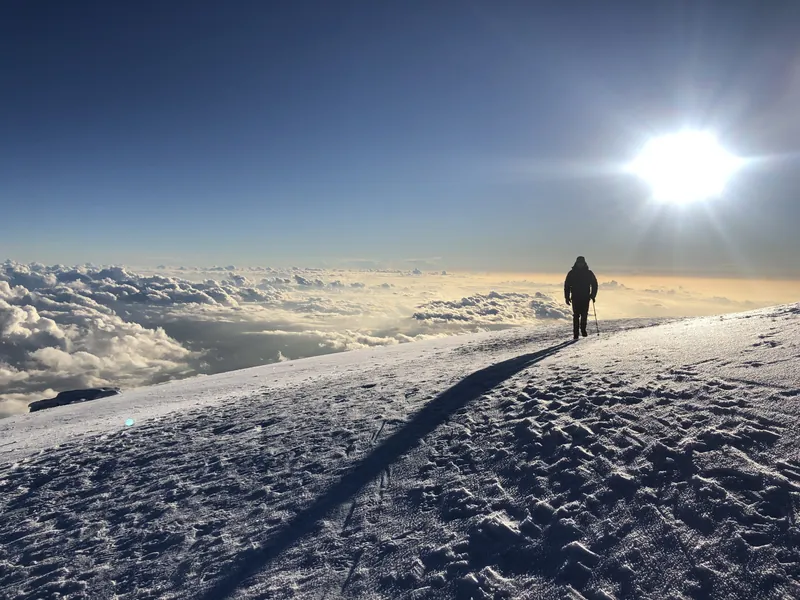
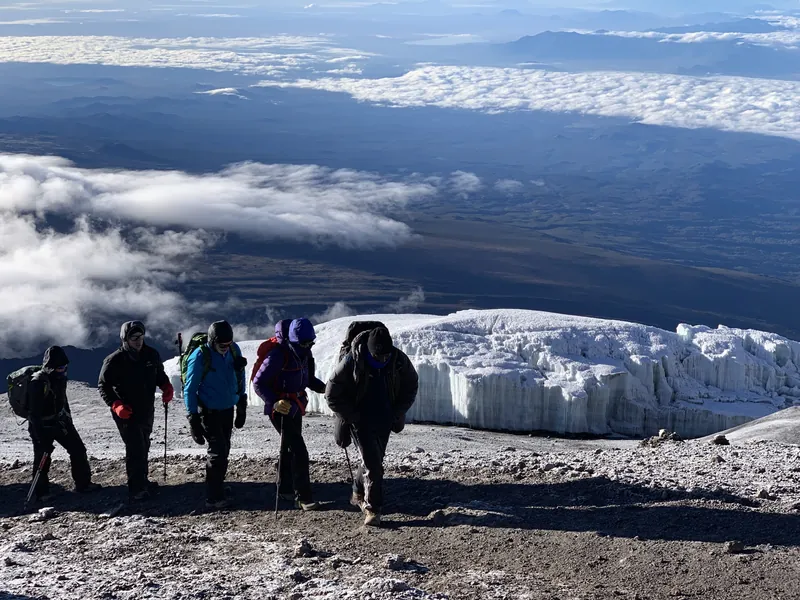
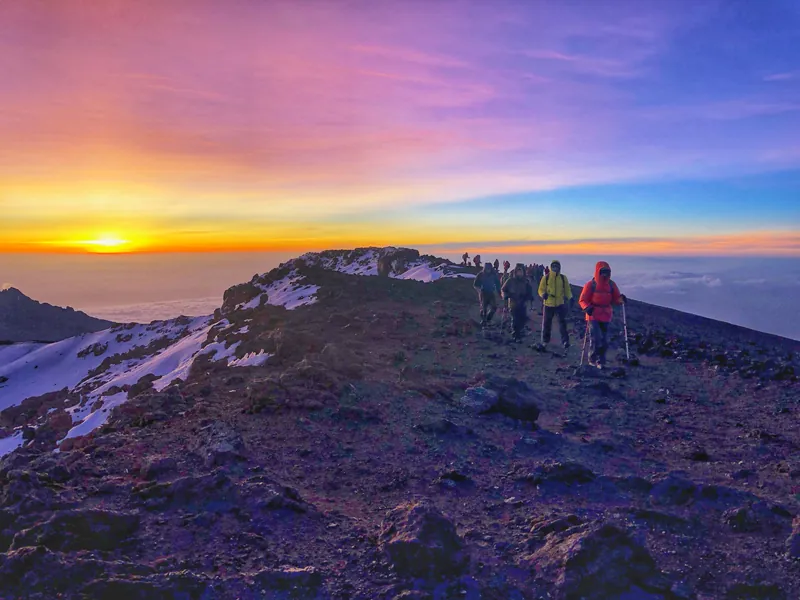
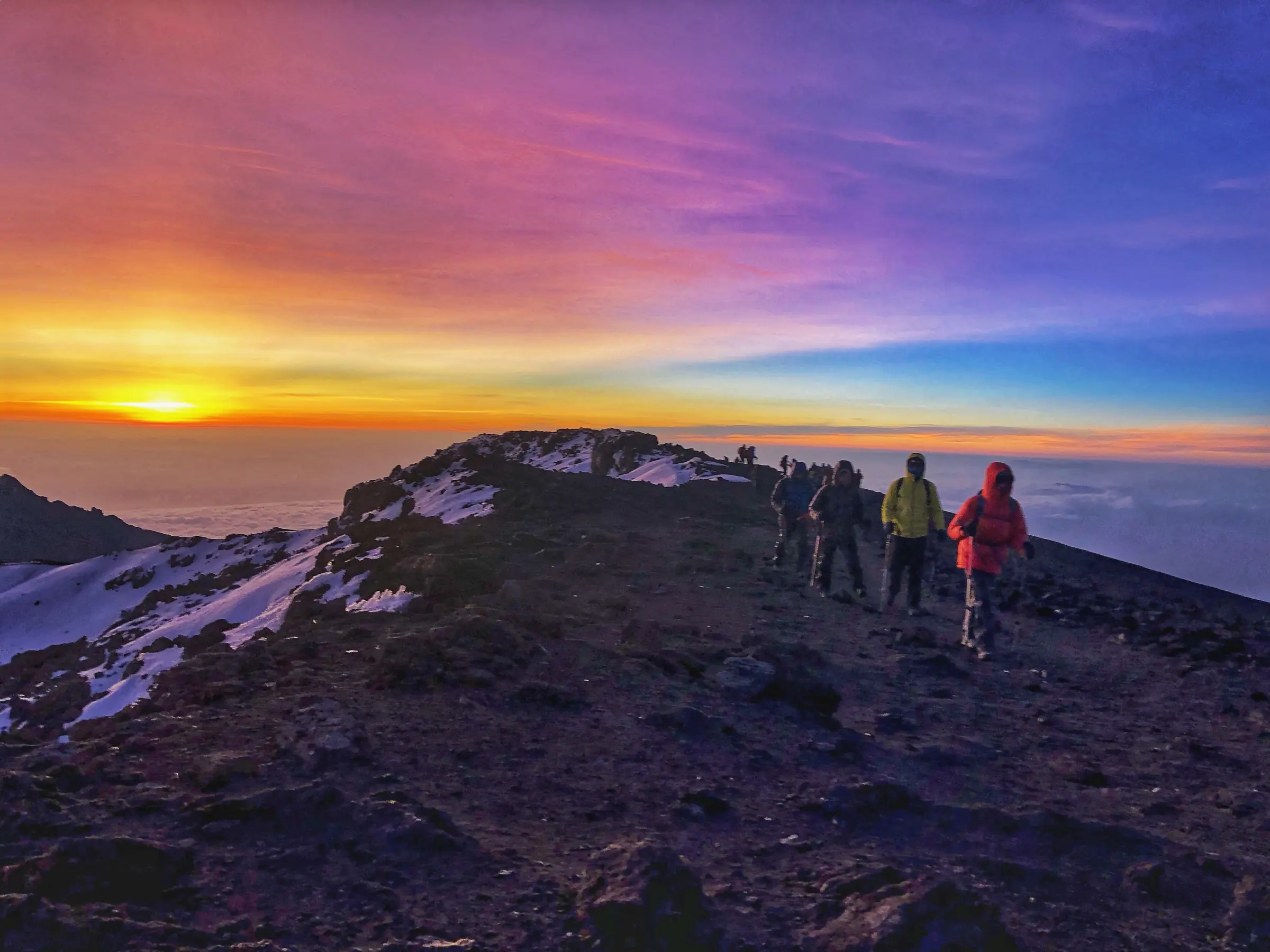
Hot sun by day, freezing nights and about half the oxygen of sea level. Glaciers, snow and the summit, Uhuru Peak.
iii. Acclimatisation & altitude
Pole pole: slowly, slowly.
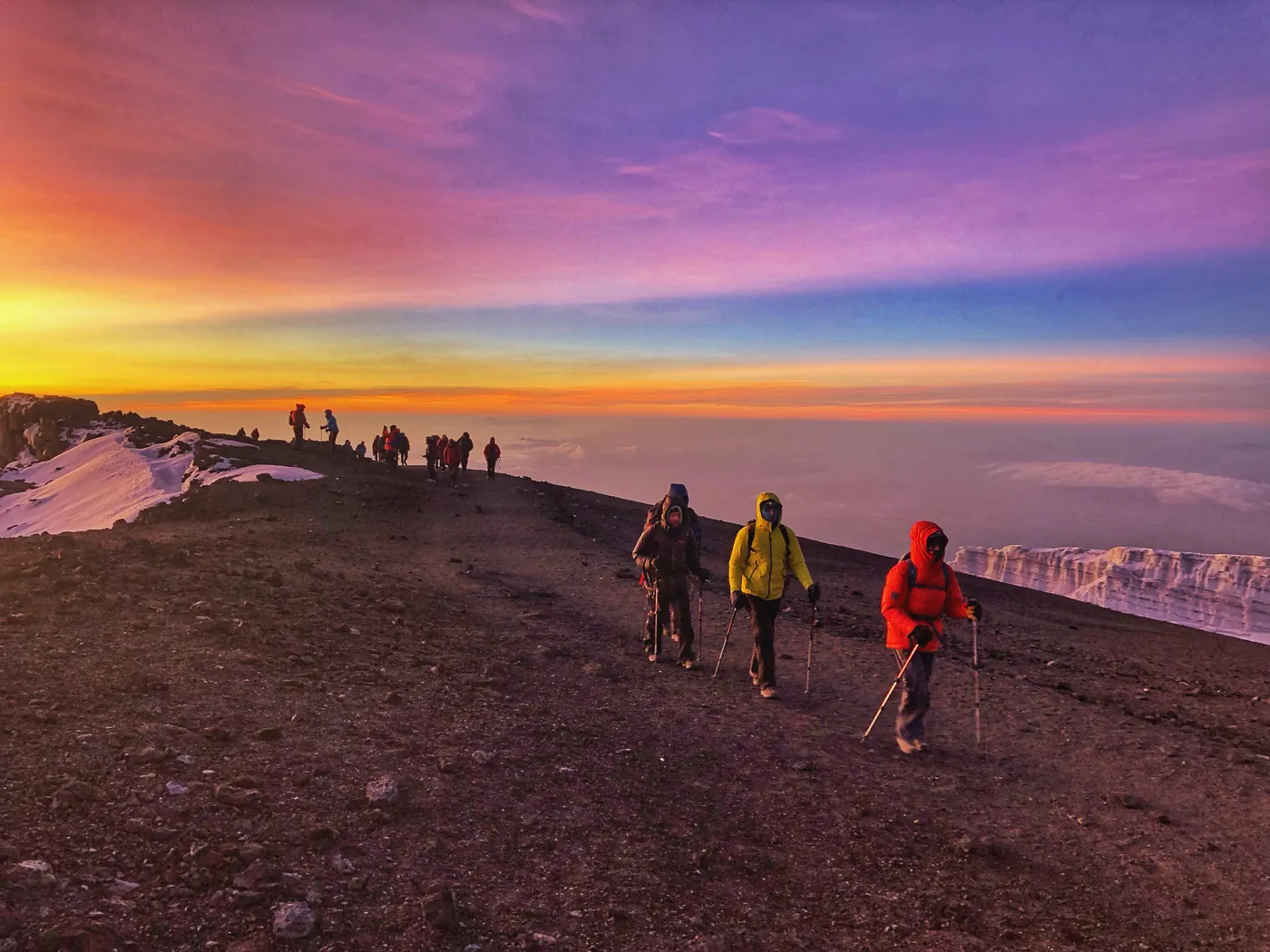
Most trekkers feel the altitude in some way, however fit they are. That is why we only use routes designed with acclimatisation in mind: the longer the route, the higher your chance of reaching the summit.
Drink plenty of water
Aim for 3–4 litres a day. We provide as much as you want.
Take it slow
Walk slowly and enjoy the scenery. Your trek is not a competition.
Eat well
Your menu is designed to give you the energy to reach the summit.
Talk to your doctor
Ask whether altitude medication such as Diamox (acetazolamide) is right for you, and try it at home before you travel.
Always share how you feel with your head guide. Daily health checks are part of every climb.
Adding a safari?
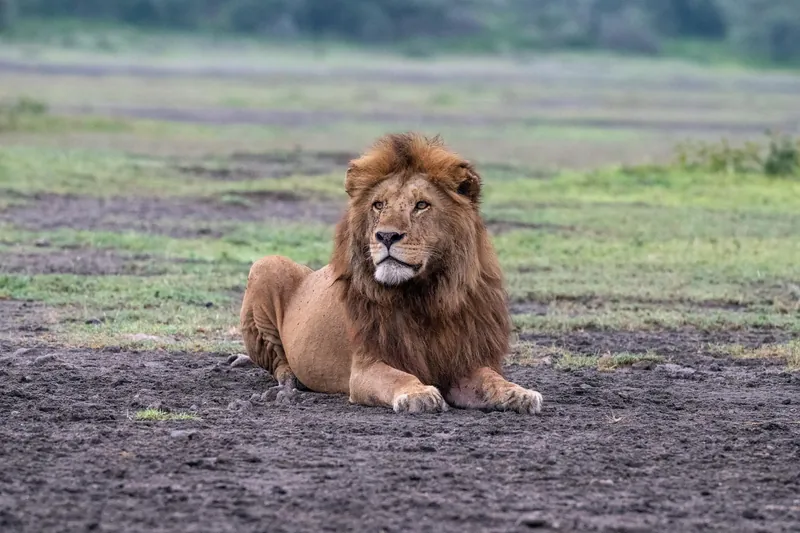
December to March is green and quieter, with many births in January and February. June to October is the dry season, when wildlife gathers at the water. Heavy rains from April to mid-May make some areas impassable.
Find your window.
Tell us your dates and we will suggest the best route and timing for your group.
Plan your climb